

Original research on cognitive privacy, algorithmic influence, and the defense of independent thought.








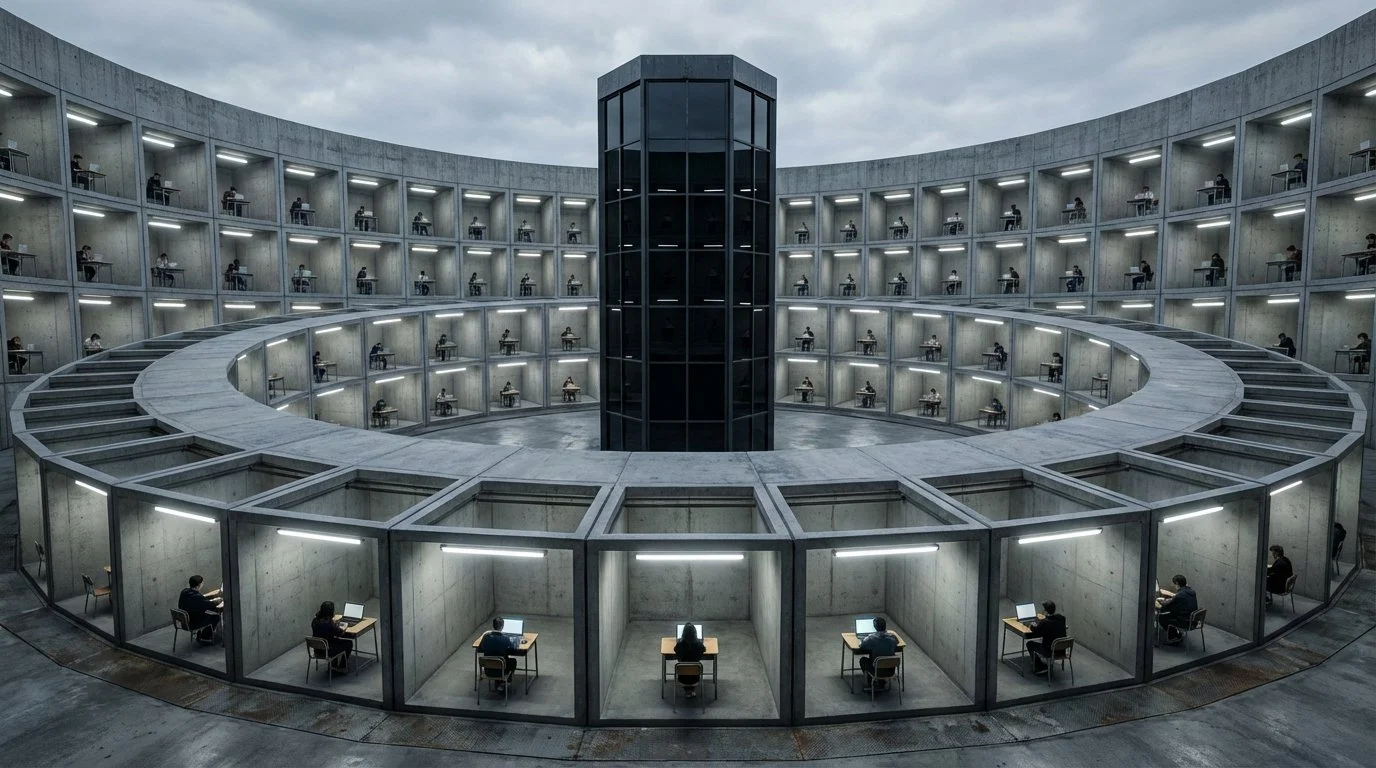


Attachment Defeats Privacy Controls
Meta's Muse Charm is a keychain with a cartoon face, a camera, three microphones, and a direct line to an inference engine. Coverage has treated the Tamagotchi comparison as a joke about whether anyone needs it. The better reading is that it tells you what the device will do. Every privacy control assumes a user who evaluates the exchange. Attachment is what removes her.
Algorithmic Influence is a Population Vulnerability
Recommendation systems do not homogenize a population. They fragment it, then homogenize inside each fragment. What you see next is determined by what the system has already inferred about you, and what you see next confirms the inference, which sharpens the next delivery. Each person ends up inside a loop that is internally consistent and externally narrow, and the consistency is what makes it feel like judgment rather than supply.

The Architecture of Total Capture
Hesitation before typing, deleted drafts, or pauses mid-thought are no longer private. They're data points. The Architecture of Total Capture introduces cognitive privacy and documents four convergent threats: pre-upload scanning, biometric sentiment tracking, analytic atrophy, and cognitive prompt injection.
The Six Domains of Cognitive Capture
Most AI audits evaluate data privacy and cybersecurity, but completely ignore what the system does to human thinking. The Cognitive Privacy Impact Assessment (CPIA) introduces six critical domains to evaluate how AI systems capture, infer, and influence cognitive processes. Here is the framework every responsible AI audit must address to protect human agency.

The Liar's Dividend: How AI Made Reality Optional
AI has provided power with a permanent escape hatch from reality. The mere existence of synthetic media means anything inconvenient can now be dismissed with two words: "AI generated." We analyze the operationalization of the "Liar’s Dividend" in the 2026 Iran conflict and the structural shift toward an architecture of optional reality.

Cognitive Prompt Injection: The Attack Vector Nobody's Defending
You form an opinion. It feels like yours. But the article was surfaced by an algorithm. The pattern was amplified because it triggered engagement. You weren't hacked. You were nudged. At scale.
Hesitation before typing, deleted drafts, or pauses mid-thought are no longer private. They're data points. The Architecture of Total Capture introduces cognitive privacy and documents four convergent threats: pre-upload scanning, biometric sentiment tracking, analytic atrophy, and cognitive prompt injection.