

Synthetic Sexual Media is a Cognitive Security Problem
For the past year I have described one problem from several directions. Systems that record how we think. Systems that infer what we will decide before we decide it. Systems that shape what feels safe to consider. I assembled these into a single structure and called it the architecture of total capture. I spent most of that year on two of its parts, capture and inference, the parts that treat the mind as something to be observed and modeled. The third part, influence, is the one I said the least about but this problem has been forming in plain sight, and is becoming far more nefarious than I could have envisioned.
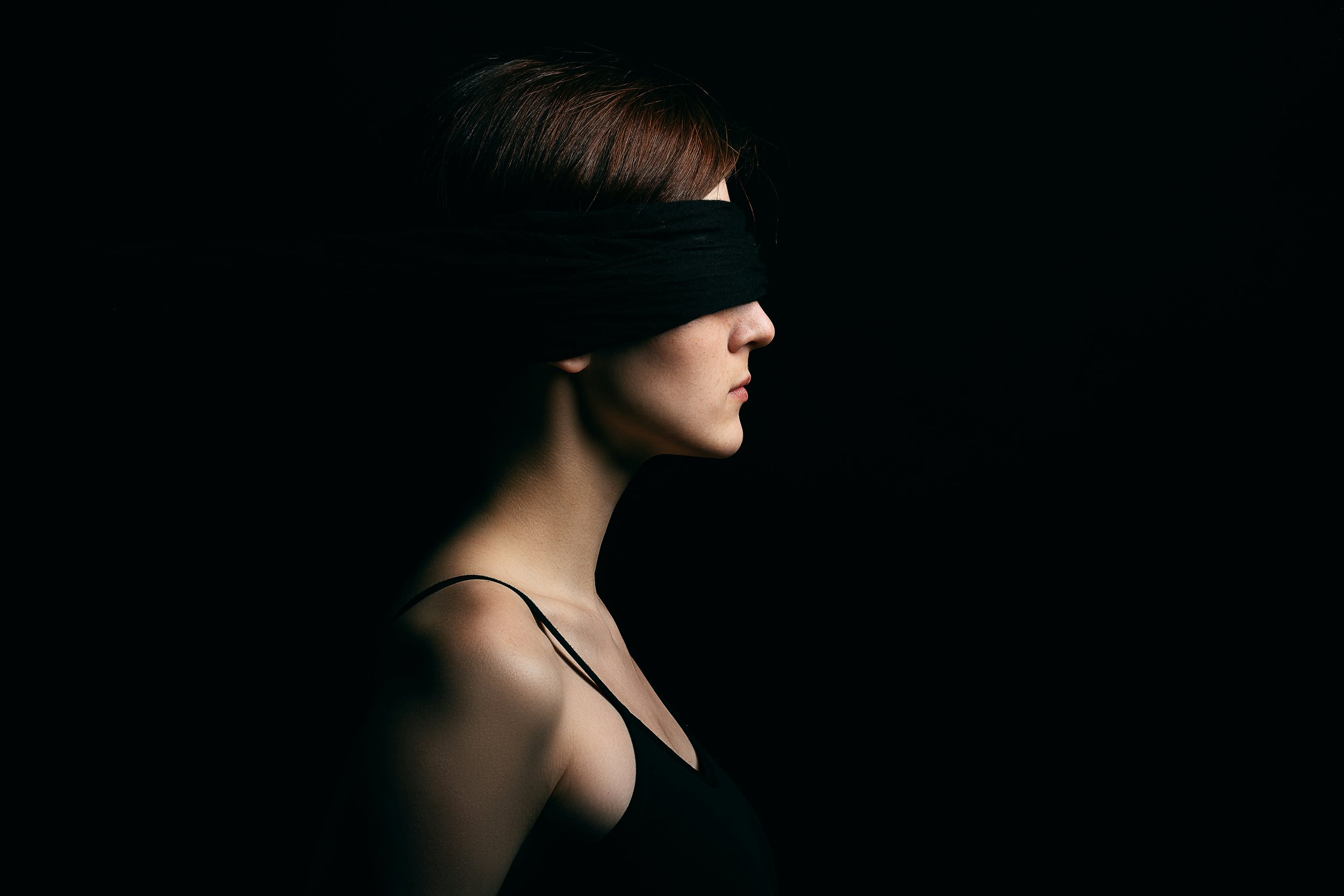
A self is not held entirely inside your own head. Part of it is held in the minds of the people whose regard makes you who you are.
Through 2025 and into this year, governments moved with unusual speed against synthetic sexual imagery. The United States passed a federal takedown law. The United Kingdom made the creation of a non-consensual sexual image a criminal act, not only its distribution, and moved against the tools built to produce it. Platforms were placed under duties to remove this material on notice. But this entire response shares one very flawed assumption. It treats the image as the harm. Remove the image, and the harm is addressed.
That assumption is wrong, and the speed of the response has hidden how wrong it is.
The Image is the Instrument, Not the Injury
A fabricated sexual image of a real person is not primarily a depiction. It has a deeper function to compel the victim do something, or stop doing something, out of fear. Pay. Stay silent. Withdraw. Comply. The image is the means to coercion.
Extortion using sexual imagery no longer requires that a victim ever produced a real image of a person. A plausible fabrication is enough to achieve the perpetrator’s purpose. The reported pattern holds across large numbers of cases: contact, the threat of exposure, shame, compliance, and often escalation after the first payment or favor. What is extracted is not only money but more importantly, the victim's freedom to act on their own judgment. The threat works by converting a person's standing in the eyes of others into a lever that someone else can pull and manipulate.
Danielle Citron argued in the Yale Law Journal that sexual privacy is not a niche concern but a foundation of self-determination, because control over one's intimate life is bound up with the capacity to be a self at all. Evan Stark's account of coercive control describes domination achieved not through single acts but through a sustained climate of fear that contracts the victim's autonomy until choice itself narrows. Synthetic media industrializes that climate because it allows a stranger with no prior access manufacture the leverage that once required a relationship to build.
The Coercion Scales
The individual case is the visible edge of a larger problem, and the larger problem is what makes this a cognitive security concern rather than a series of private tragedies.
When anyone's likeness can be rendered into sexual material on demand, the threat does not stay with only the people who are actually targeted. It may also change the behavior of everyone who understands that they could be. The Wilson Center's work on gendered disinformation documented synthetic sexual imagery used deliberately to push women out of political and public life. The mechanism is not persuasion but intimidation. The message is that visibility now carries a sexual penalty, and the penalty can be fabricated at will.
This is the chilling effect, which the empirical work of Jonathon Penney has shown is a measurable response to the mere awareness of exposure. Extend it from surveillance to fabrication and the effect sharpens. People self-censor, decline the role, leave the platform, stay out of the arena, not because they were attacked but because they correctly judge that they could be and that no one would arrive in time to protect them.
There is a second population-scale effect, and Robert Chesney and Danielle Citron coined it in 2019: the liar's dividend. Once a society knows that any image can be faked, every real image becomes deniable and every fabricated one becomes plausible. The shared evidentiary floor gives way. Real victims are disbelieved. Genuine abusers claim fabrication. The coercion no longer needs a specific target to do damage, because it has degraded the public's capacity to know what is true about anyone's body and conduct. That degradation of shared judgment is a cognitive security failure by definition.
If any person's self can be fabricated, the reliability of ordinary social judgment degrades. Thus, you may lose confidence in your read of the people around you, and they lose confidence in their read of you. The trust that lets strangers cooperate, hire, vouch for, and believe one another rests on the assumption that what they perceive of each other is broadly real. Remove that assumption and relationships become harder to form and harder to keep, not because people have grown worse but because the evidence they use to know one another has been made unreliable. The harm is epistemic before it is anything else.
A Harm to the Mind
The reason the law keeps reaching for the image is that the image is the thing it already knows how to regulate. The harm it cannot see is the one that does the most damage.
A self is not held entirely inside your own head. Part of it is held in the minds of the people whose regard makes you who you are. A fabricated sexual image installs a false version of you into that shared space. You know it is not you. That does not mean the people who see it know, and once it has been seen, proving it false does not reverse it. The version of you now lodged in their perception was never yours to authorize and is not yours to withdraw. This is why the harm does not depend on belief. It works even when everyone suspects the image is fake, because it has already entered the field of relations that constitutes who you are.
Coercion works because the target correctly understands that a denial cannot reach the idea of them already settled in someone else's mind. An image takedown removes the file without removing the perception. So peoples’ fear of sexual deepfakes is not irrational but a very accurate read of a harm the law has not named.
Marcello Ienca and Roberto Andorno proposed mental integrity as a right against the unauthorized alteration of a person's mental life, and psychological continuity as a right to the coherence of one's own identity over time. A fabricated self placed in the relational field is an alteration of your mental life performed from the outside, and a break in the continuity of who you are taken to be. Cognitive security, as I defined it in the architecture of total capture, is the defense of mental processes against unauthorized external influence and the protection of the integrity of judgment. Synthetic sexual media is one of its most concrete violations, because it does not argue with the mind. It manufactures a version of the person and sets it loose among the people whose recognition the person depends on. Susie Alegre has argued that freedom of thought is an enforceable right and not a metaphor, and a fabricated self is among the bluntest ways to override it.
This is entirely different than the surveillance harm I have written about before. It is an extension of the same architecture onto a different surface. Capture has meant capturing the traces of the mind but deepfakes captures the likeness, fabricates from it, and reaches the self through other people. The mechanism is influence, not inference.
The Law Regulates the Artifact. The Harm is the Function.
I really want you, the reader, the understand that current takedown laws only remove a file or image but do not remove the fear that produced compliance, created distress, or contributed to the public's new uncertainty about what is real. Creation offences and platform safety measure are certainly necessary and overdue, but regulation must extend beyond this. These measures treat fabricated sexual media as illicit content. The harm is not the content. The harm is coercion carried out through a person's own seized image, and no law yet classifies that as the violation it is.
That is what I am planting. The law we have for intimate imagery is built on exposure. It presupposes a true intimate fact, a real private self that someone revealed without permission, and it works by punishing the revelation. The fabricated case contains no true intimate self at all. Nothing was exposed, because there was nothing real to expose. An ordinary photograph, freely shared, can be turned into a sexual self that never existed and then lodged among the people who know the target, and the injury arrives anyway. A legal mechanism designed to protect private information will systematically under-protect this harm, because there is no true information for it to protect. That is the failure cognitive security sees and exposure-based law cannot. Who is permitted to manufacture a version of you and place it in other minds, and through what? This is the question that must be answered. Name the harm that way and the obligation changes. We stop asking platforms to delete faster and start asking who is permitted to manufacture a person and set it loose, and what we owe the people whose selves are being written by strangers while we argue about the file.
Timothy Cook is Director of The Cognitive Privacy Project and author of the "Algorithmic Mind" column at Psychology Today. He is Securiti Certified in AI Security & Governance.
Contact: timothy@cognitiveprivacyproject.org Web: cognitiveprivacyproject.org
© 2026 Timothy Cook / The Cognitive Privacy Project. All rights reserved.Licensed under CC BY-NC-ND 4.0. You may share this work with attribution. Commercial use and derivatives require written permission.

References
Alegre, S. (2022). Freedom to think: The long struggle to liberate our minds. Atlantic Books.
Chesney, R., & Citron, D. K. (2019). Deep fakes: A looming challenge for privacy, democracy, and national security. California Law Review, 107, 1753–1820.
Citron, D. K. (2019). Sexual privacy. Yale Law Journal, 128, 1870–1960.
Citron, D. K. (2022). The fight for privacy: Protecting dignity, identity, and love in the digital age. W. W. Norton.
Cook, T. (2026). Cognitive privacy: Protecting mental autonomy in the age of behavioral algorithms [Working paper]. The Cognitive Privacy Project.
Ienca, M., & Andorno, R. (2017). Towards new human rights in the age of neuroscience and neurotechnology. Life Sciences, Society and Policy, 13(5). https://doi.org/10.1186/s40504-017-0050-1
Jankowicz, N., Craig, J., Brooks, M., Edwards, A., Simmons, C., Joseff, K., & Farkas, J. (2021). Malign creativity: How gender, sex, and lies are weaponized against women online. Wilson Center.
McGlynn, C., & Rackley, E. (2017). Image-based sexual abuse. Oxford Journal of Legal Studies, 37(3), 534–561.
Penney, J. W. (2022). Understanding chilling effects. Minnesota Law Review, 106(3), 1451–1530.
Stark, E. (2007). Coercive control: How men entrap women in personal life. Oxford University Press.
Susser, D., Roessler, B., & Nissenbaum, H. (2019). Online manipulation: Hidden influences in a digital world. Georgetown Law Technology Review, 4, 1–45.
TAKE IT DOWN Act, Pub. L. No. 119-12 (2025).
Data (Use and Access) Act 2025 (UK), s. 138.

Hesitation before typing, deleted drafts, or pauses mid-thought are no longer private. They're data points. The Architecture of Total Capture introduces cognitive privacy and documents four convergent threats: pre-upload scanning, biometric sentiment tracking, analytic atrophy, and cognitive prompt injection.